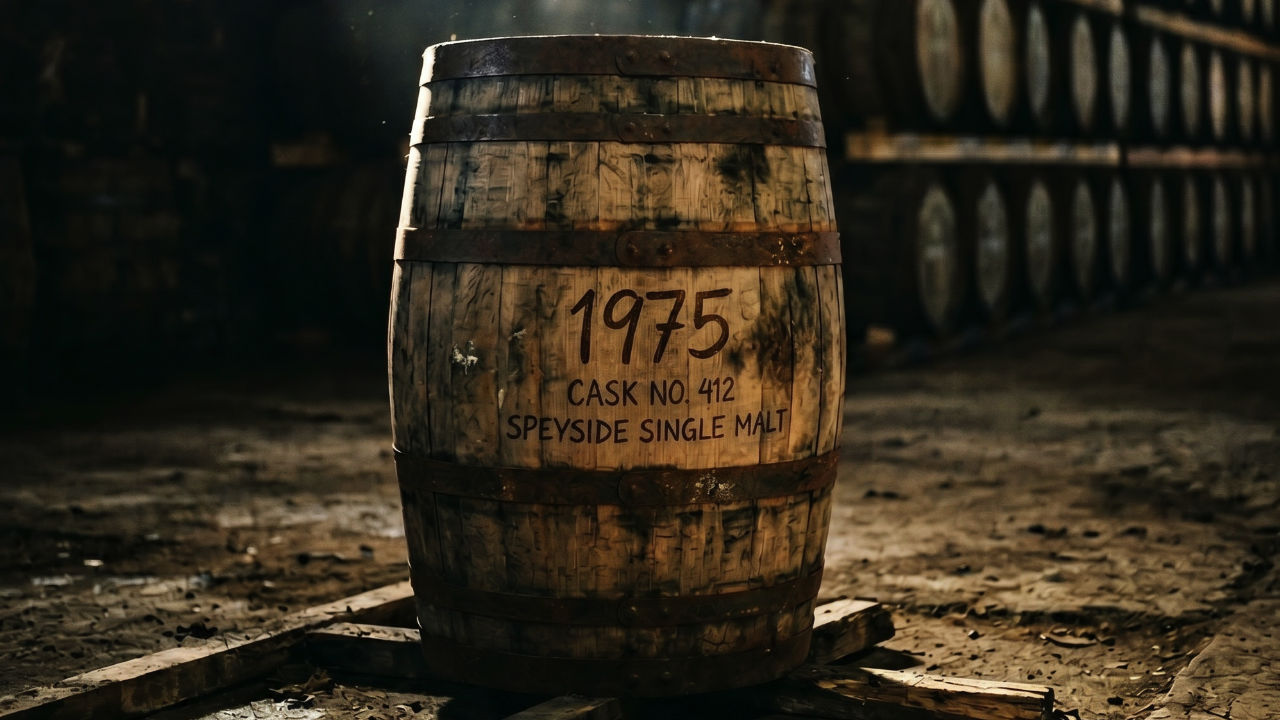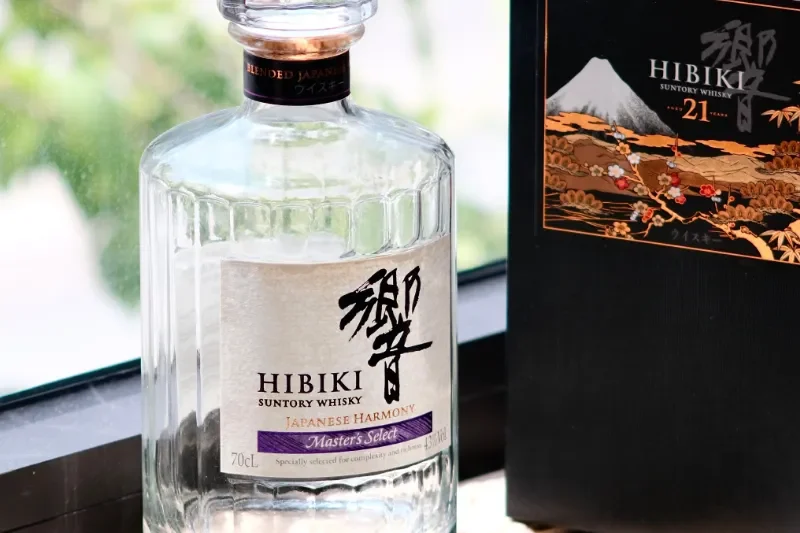
If you ask whisky enthusiasts which style is best, you’ll get a load of different answers. However, if you ask which offers the best potential as an investment, the answer gets more complicated. When it comes to Scotch vs bourbon vs Japanese whisky investment, each has its own rules, markets and risks, and what suits one investor may not suit another.
As cask whisky investment specialists, we’ve put this guide together to compare all three, so you can ask relevant questions before you invest.
Scotch vs Bourbon vs Japanese Whisky Investment
Style vs Cask Type
The three names in the title are whisky styles, defined by where and how the spirit is made. The cask type is the wood it matures in, and that is a separate choice:
- Ex-bourbon barrel: around 200 litres, the most common cask in Scotch maturation
- Hogshead: around 250 litres, often rebuilt from ex-bourbon barrel staves
- Sherry butt: around 500 litres, prized for the rich, dark character it gives the spirit
Scotch Whisky Investment: The Established Choice
For UK cask investors, Scotch whisky is the natural starting point.
Why it appeals
- Mature infrastructure: Scotland has a well-developed network of distilleries, bonded warehouses, brokers and independent bottlers, so there is a recognised route to market.
- Clear legal definition: Under the Scotch Whisky Regulations, Scotch must be matured in oak in Scotland for at least three years.
- Depth of buyers: Independent bottlers, brokers and collectors all buy Scotch casks on the secondary market.
- Distillery variety: Some distilleries are highly sought after, while others are largely unknown. That gives investors a wide range but demands careful selection.
What you should consider
- Quality and pricing vary widely between distilleries and between providers.
- Newer casks take years to mature, and the time to a potential exit is long.
- Plenty of Scotch is available, so not every cask will find a buyer easily.

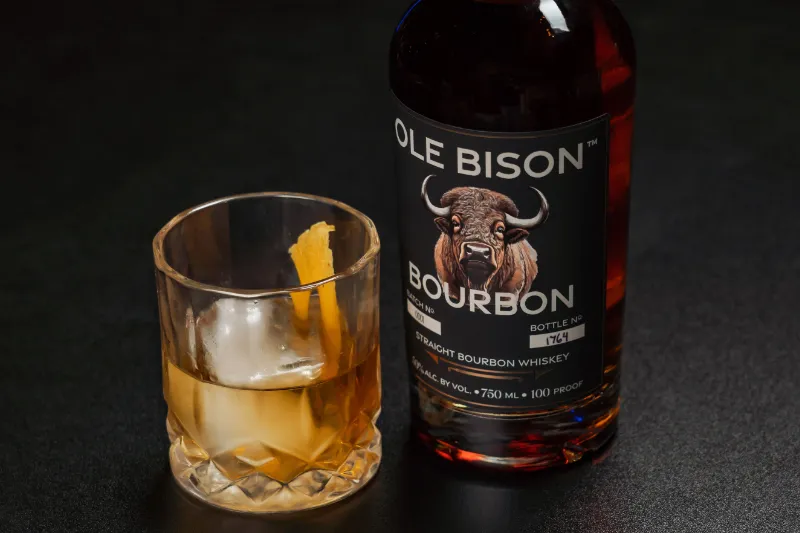
Bourbon: Popular as a Spirit, Less Common as a Cask Investment
Bourbon has a loyal following, but it works differently from Scotch in an investment context.
Why it’s different
- Single-use barrels: Bourbon must legally be aged in new charred oak, so the barrels are emptied and sold on. That is why ex-bourbon barrels are so common in Scotch maturation.
- A different market: Because those barrels are used and shipped abroad so widely, the investment-cask market is built mainly around Scotch, not bourbon.
- Limited access: Buying and holding bourbon casks is far less established for UK investors, and secondary market routes are less clear.
What you should consider
- Be cautious of any offering where the storage location, export or exit route isn’t spelled out.
- Ask how the cask would be sold, to whom, and under which jurisdiction’s rules.
Japanese Whisky: Scarcity and Hype
Japanese whisky has attracted worldwide attention over the past two decades, and prices for some bottles have climbed accordingly.
Why it appeals
- Strong demand: Collectors around the world seek out certain Japanese distilleries.
- Limited supply: A small number of producers and a history of stock shortages add to the sense of rarity.
What you should consider
- Labelling: For years, “Japanese whisky” had no strict legal definition, and some products blended imported whisky. Industry standards introduced in 2021 now set clearer rules, but make sure you know exactly what you’re buying.
- Access: Casks from established Japanese distilleries are seldom offered to private investors, so be cautious of anything claiming otherwise.
- Sentiment risk: Demand driven by trends can cool as well as heat up.
So, Which Offers the Best Potential?
When looking at Scotch vs Bourbon vs Japanese Whisky for investment purposes, there is no universal winner, and anyone who tells you otherwise is selling something. A fair summary:
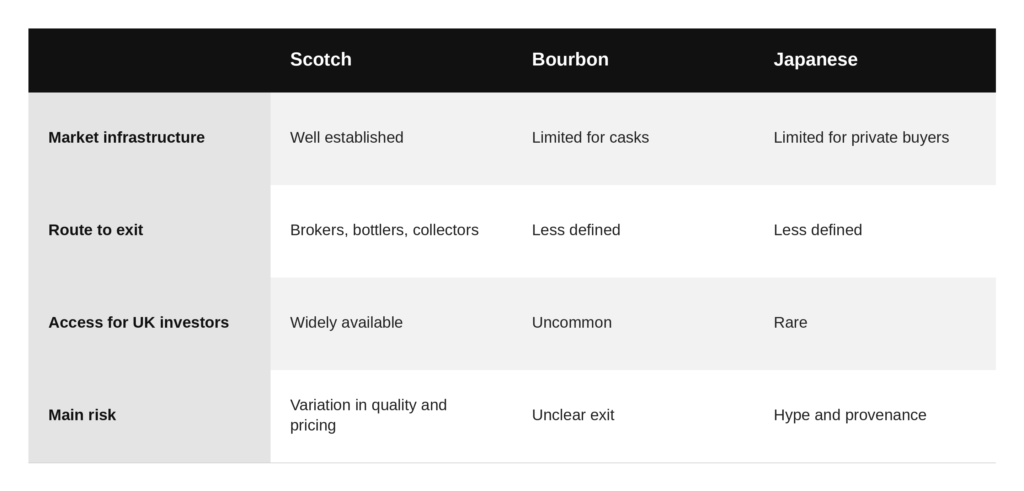
For most UK investors, Scotch offers the most accessible and best-understood route. That doesn’t make every Scotch cask a good investment. Distillery, age, cask type, fees and the seller all matter just as much as the style.
Whichever Style You Choose, Ask These Questions
- Who legally owns the cask, and can I see the delivery order?
- Where is it stored, and can I verify that independently?
- What are the total costs of storage, insurance and selling?
- How, and to whom, will the cask be sold?
- Is the price supported by independent valuations or comparable sales?
Take a look at Cask Whisky Investment: Your Questions Answered for a detailed look at the FAQ’s.
Thinking About Your First Cask?
If you’re deciding on cask types and styles, the London Barrelhouse team can talk you through the options and answer your questions, with no obligation.
Contact us or download your FREE cask whisky investment guide